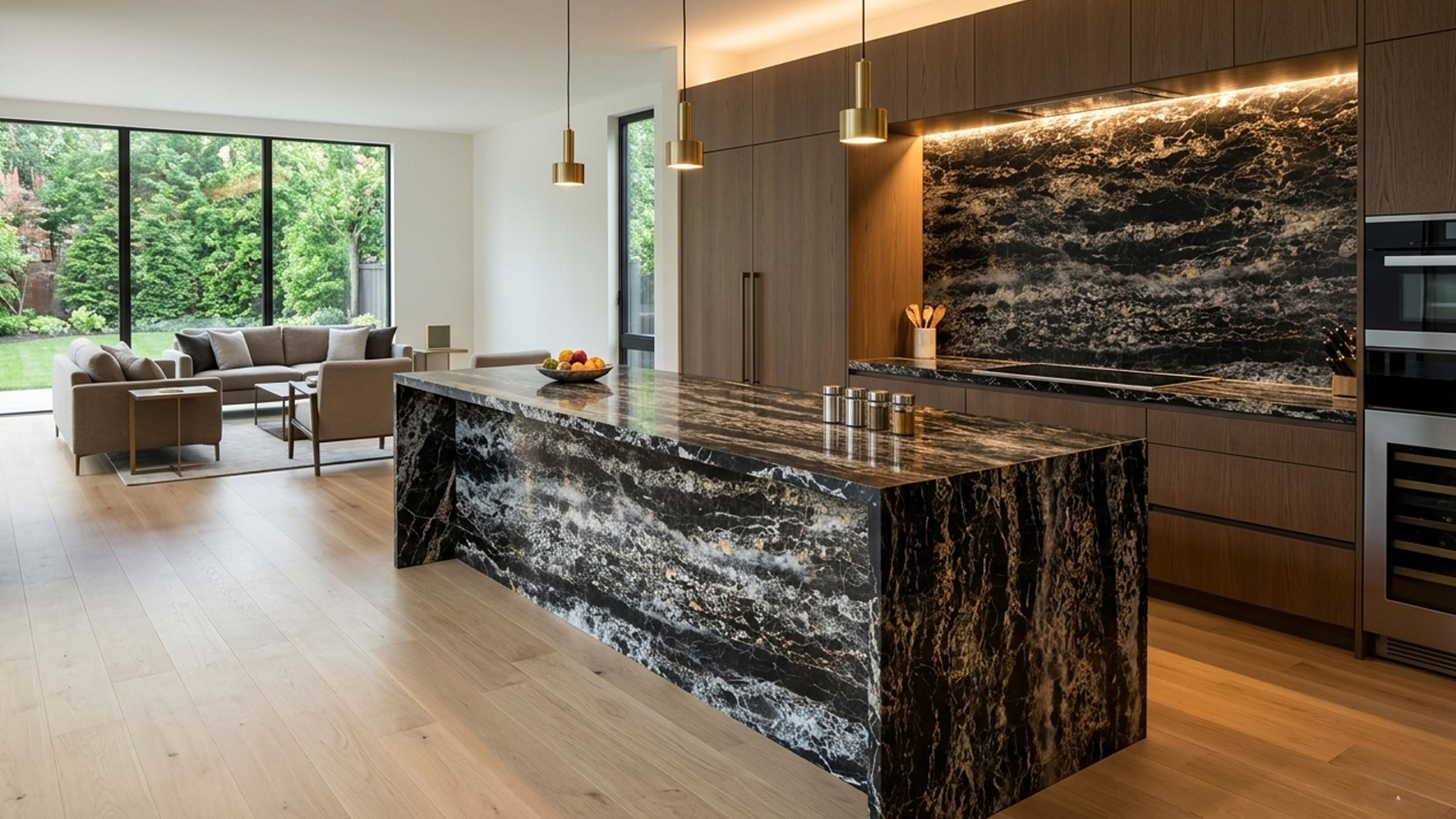
There is a point when a floor stops looking like the floor you remember. The marble is still there. The tile has not moved. Nothing dramatic has happened to the surface. It has simply been walked across, cleaned, spilled on, tracked over, and lived on for years. In South Florida, that everyday wear can show up in some very particular ways. A floor beside the pool may look noticeably different from one in a guest room. The entrance may have lost its shine while the stone in a quieter hallway still looks much closer to its original finish. That does not necessarily mean the material is finished. It may just mean the floor has had a busy life.
Look at the Places Everyone Walks Through
The easiest way to spot wear is to stop looking at the floor as one large surface. Look at the paths people actually take. The route from the front door to the kitchen. The area around a kitchen island. The hallway connecting bedrooms to the main living space. The entrance from the patio or pool. These places receive far more traffic than a room that is rarely used. Over time, that traffic can change the appearance of polished stone. Fine grit can get carried indoors on shoes. Small particles underneath furniture or feet can act as abrasives. Repeated walking gradually affects the finish. That is why one section of a marble floor can look tired while another section still has plenty of its original shine. The difference is often use, not age.
South Florida Has Its Own Conditions
A home in Palm Beach does not experience the same environment as a home in a dry climate. Humidity is part of everyday life—just as we explore in our guide on how South Florida's heat and humidity damage marble floors. So are rain, outdoor living, pools, patios, and frequent movement between inside and outside.
That matters when you are looking after stone and tile. Pool areas in particular get a lot of activity. Water gets tracked across the surrounding surface. Sand and dirt can come in from outside. Sunscreen, spills, and other everyday substances can also end up on the floor. None of this means a particular stone will automatically be damaged. It does mean that a surface being used heavily in a Florida home can require a different level of attention from one that barely sees any traffic.
A Clean Floor Can Still Look Worn
This is where homeowners sometimes get stuck. The floor has been cleaned. There is no obvious dirt sitting on top of it. Yet it still looks dull.
Cleaning and restoring are not the same job. Cleaning deals with dirt and buildup. It does not necessarily bring back a worn polish or remove every mark that has developed through years of use, which is where professional marble restoration becomes essential. Marble can also develop surface problems that ordinary household cleaning will not correct. A homeowner may scrub harder and harder, thinking the problem is something sitting on top of the stone. Sometimes it is not. The change is in the surface itself.
Summary
Over years of everyday living, hard surfaces like marble, tile, and stone gradually lose their original finish due to heavy foot traffic, trapped grit, and unique South Florida environmental factors like pool water, sand, and humidity. Because routine cleaning only removes surface dirt, understanding the difference between standard maintenance and expert marble polishing is essential for reviving dull or worn floors.
Semantic Keynotes & Named Entity Recognition (NER) Tags
Semantic Keynotes
- Traffic Patterns & Surface Wear: High-traffic pathways (entryways, hallways, kitchen paths) endure localized abrasive friction, causing uneven loss of luster compared to low-traffic areas.
- South Florida Environmental Factors: Year-round humidity, pool water tracking, fine sand, and continuous indoor-outdoor living place intense stress on natural stone and tile surfaces.
- Cleaning vs. Stone Restoration: Household cleaning only removes surface residue; it cannot reverse micro-scratches, chemical dulling, or etched damage in the stone.
- Material-Specific Stone Care: Marble, travertine, Mexican tile, and granite each possess distinct physical properties requiring customized restoration methods rather than generic cleaning.
- Reviving Original Luster: Diamond honing, specialized polishing, and deep sealing restore the floor's original brilliance and provide long-lasting surface protection.
NER Tags
- Organization: BK Marble Restoration LLC
- Author: Kenson Nozius (Marble & Stone Restoration Specialist)
- Location: Palm Beach County, Boca Raton, Delray Beach, West Palm Beach, Jupiter, South Florida
- Services: Marble & Stone Floor Restoration, Tile & Grout Cleaning, Marble Polishing, Diamond Honing, Stone Sealing, Floor Refinishing
- Materials: Marble, Travertine, Mexican Tile, Granite, Natural Stone
- Damage Types: Traffic Wear, Loss of Polish, Micro-scratches, Dullness, Surface Etching
Contact BK Marble Restoration LLC today for a free assessment.